PROJECT DASHBOARD
FDCH Timor Leste

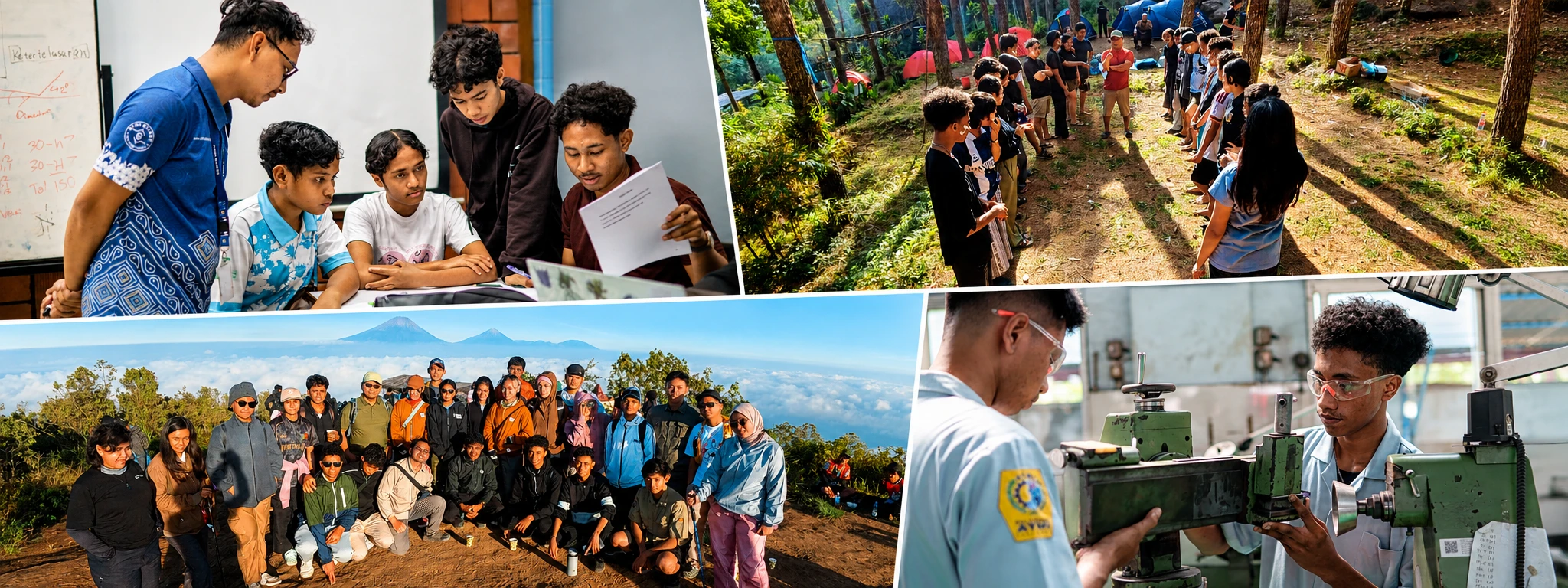
The FDCH Timor-Leste Scholarship Program is a long-term educational and student development partnership designed to support Timorese scholarship holders studying at Politeknik ATMI Surakarta. The project combines structured academic monitoring with comprehensive mentoring so that each student can progress successfully through the four-year academic pathway while developing the personal, social, and professional capabilities required for future leadership and contribution. Academic performance is monitored against scholarship requirements, with early identification and follow-up for students who require additional support. Alongside formal study, the program provides a year-round development journey covering cultural adaptation, self-management, counseling, communication, digital and AI literacy, financial responsibility, leadership, teamwork, service, and career readiness. Progress is tracked across two cohorts through integrated student records, academic milestones, development activities, and program outcomes. Through this approach, FDCH and ATMI BizDEC seek to help students not only complete their education, but mature into competent, responsible, compassionate, and committed professionals who can contribute meaningfully to Timor-Leste’s future.
Executive Snapshot
FDCH Scholarship Holders - Politeknik ATMI Surakarta
Academic Performance
Manufacturing Engineering Technology
8 scholarship holders across two cohorts: 5 in Cohort 1 at Level 2 and 3 in Cohort 2 at Level 1. Cohort 1 currently records an average GPA of 3.00, with no students requiring academic attention.
Mechatronics Engineering Technology
11 scholarship holders across two cohorts: 5 in Cohort 1 at Level 2 and 6 in Cohort 2 at Level 1. Cohort 1 currently records an average GPA of 2.98, with 3 students requiring academic attention.
Manufacturing Design
7 scholarship holders across two cohorts: 5 in Cohort 1 at Level 2 and 2 in Cohort 2 at Level 1. Cohort 1 currently records an average GPA of 2.89, with 1 student requiring academic attention.
Current Follow-up
High
Requires Attention
Cohort 1 academic follow-up
Continue academic follow-up for the 4 Cohort 1 students currently requiring attention.
High
Requires Attention
4 Cohort 1 scholarship holders
Track Level 2 progression, GPA, D grades, and practical performance against scholarship requirements.
Medium
New Intake
11 Cohort 2 students
Complete onboarding and establish the Level 1 academic baseline.
Medium
Two-Cohort Monitoring
All 26 scholarship holders
Maintain cohort-separated monitoring and update results at each academic decision point.
2026/27 Program Snapshot
Annual Activities
30The annual plan brings together 30 structured activities covering academic support, personal development, mentoring, and contribution.
Development Phases
4The development journey moves through adaptation, habit formation, competence building, and contribution.
Counseling Touchpoints
6Scheduled counseling periods create regular space to review student progress, challenges, and personal development throughout the year.
Months of Development
12Development runs alongside the academic pathway throughout the full 2026/27 academic year.
Outcome Journey
August–October 2026 · Know Self & Adapt
November 2026–January 2027 · Self-management & Habit Formation
February–April 2027 · Competence & Potential Development
May–July 2027 · Integrate Self & Prepare Contribution
Key Academic Requirements
Students progress academically by maintaining a minimum GPA of 2.00, achieving practical performance equivalent to at least Grade C (5.51), receiving no more than 3 D grades in theoretical courses at each academic level, and receiving no E grade.
Academic Pathway
Full 4-year program pathway with Cohort 1 and Cohort 2 progression | AY 2026/2027
The pathway shows the complete four-year academic journey and the current position of each scholarship cohort. Supporting academic guidelines are available below.
Academic References
Manufacturing Technology Engineering (RTM)
159L140
L240
L342
L437
Cohort 1: Level 2 / Year 2 | Cohort 2: Level 1 / Year 1
Mechatronics Engineering Technology (TRMK)
155L140
L242
L342
L431
Cohort 1: Level 2 / Year 2 | Cohort 2: Level 1 / Year 1
Manufacturing Design (PM)
166L140
L244
L342
L440
Cohort 1: Level 2 / Year 2 | Cohort 2: Level 1 / Year 1
Four-Year Academic Journey
| Program | Cohort | Level 1 | Level 2 | Level 3 | Level 4 | Current Level | Completed | Pathway |
|---|---|---|---|---|---|---|---|---|
| RTM | Cohort 1 | 40 credits · 2025/2026 · Completed | 40 credits · 2026/2027 · Current | 42 credits · 2027/2028 · Planned | 37 credits · 2028/2029 · Planned | Level 2 | 40 / 159 | 25.2% |
| RTM | Cohort 2 | 40 credits · 2026/2027 · Current | 40 credits · 2027/2028 · Planned | 42 credits · 2028/2029 · Planned | 37 credits · 2029/2030 · Planned | Level 1 | 0 / 159 | 0.0% |
| TRMK | Cohort 1 | 40 credits · 2025/2026 · Completed | 42 credits · 2026/2027 · Current | 42 credits · 2027/2028 · Planned | 31 credits · 2028/2029 · Planned | Level 2 | 40 / 155 | 25.8% |
| TRMK | Cohort 2 | 40 credits · 2026/2027 · Current | 42 credits · 2027/2028 · Planned | 42 credits · 2028/2029 · Planned | 31 credits · 2029/2030 · Planned | Level 1 | 0 / 155 | 0.0% |
| PM | Cohort 1 | 40 credits · 2025/2026 · Completed | 44 credits · 2026/2027 · Current | 42 credits · 2027/2028 · Planned | 40 credits · 2028/2029 · Planned | Level 2 | 40 / 166 | 24.1% |
| PM | Cohort 2 | 40 credits · 2026/2027 · Current | 44 credits · 2027/2028 · Planned | 42 credits · 2028/2029 · Planned | 40 credits · 2029/2030 · Planned | Level 1 | 0 / 166 | 0.0% |
Academic Progression Requirements
Students progress academically by maintaining a minimum GPA of 2.00, achieving practical performance equivalent to at least Grade C (5.51), receiving no more than 3 D grades in theoretical courses at each academic level, and receiving no E grade.
Student Monitoring
Individual academic position across both scholarship cohorts.
26 students
Current Schedule : Teori
Student Allowance : Rp. 40.310.000,00
Recorded academic progress25.8%
Program Credits155
GPA2.73
Current LevelLevel 2
Academic PositionRequires Attention
Current Schedule : Teori
Student Allowance : Rp. 49.899.375,00
Recorded academic progress25.8%
Program Credits155
GPA3.53
Current LevelLevel 2
Academic PositionMeets Current Requirement
Current Schedule : Teori
Student Allowance : Rp. 22.827.550,00
Recorded academic progress24.1%
Program Credits166
GPA2.75
Current LevelLevel 2
Academic PositionMeets Current Requirement
Current Schedule : Teori
Student Allowance : Rp. 30.650.000,00
Recorded academic progress24.1%
Program Credits166
GPA2.70
Current LevelLevel 2
Academic PositionMeets Current Requirement
Current Schedule : Mikro Kontroler
Student Allowance : Rp. 34.790.000,00
Recorded academic progress25.8%
Program Credits155
GPA2.81
Current LevelLevel 2
Academic PositionRequires Attention
Current Schedule : Tech Cnc
Student Allowance : Rp. 38.407.400,00
Recorded academic progress25.8%
Program Credits155
GPA2.58
Current LevelLevel 2
Academic PositionRequires Attention
Current Schedule : Mw (s)
Student Allowance : Rp. 26.591.925,00
Recorded academic progress25.2%
Program Credits159
GPA2.85
Current LevelLevel 2
Academic PositionMeets Current Requirement
Current Schedule : Cad / Onshape
Student Allowance : Rp. 34.354.550,00
Recorded academic progress24.1%
Program Credits166
GPA2.95
Current LevelLevel 2
Academic PositionRequires Attention
Current Schedule : Smw 1
Student Allowance : Rp. 25.642.425,00
Recorded academic progress25.2%
Program Credits159
GPA3.25
Current LevelLevel 2
Academic PositionMeets Current Requirement
Current Schedule : Mw (s)
Student Allowance : Rp. 26.301.850,00
Recorded academic progress25.2%
Program Credits159
GPA3.00
Current LevelLevel 2
Academic PositionMeets Current Requirement
Current Schedule : Hob
Student Allowance : Rp. 35.501.850,00
Recorded academic progress25.2%
Program Credits159
GPA3.00
Current LevelLevel 2
Academic PositionMeets Current Requirement
Current Schedule : Cad / Onshape
Student Allowance : Rp. 31.300.000,00
Recorded academic progress24.1%
Program Credits166
GPA2.80
Current LevelLevel 2
Academic PositionMeets Current Requirement
Current Schedule : Cad / Onshape
Student Allowance : Rp. 30.246.500,00
Recorded academic progress24.1%
Program Credits166
GPA3.24
Current LevelLevel 2
Academic PositionMeets Current Requirement
Current Schedule : Programming
Student Allowance : Rp. 36.720.000,00
Recorded academic progress25.8%
Program Credits155
GPA3.24
Current LevelLevel 2
Academic PositionMeets Current Requirement
Current Schedule : Smw 1
Student Allowance : Rp. 25.310.000,00
Recorded academic progress25.2%
Program Credits159
GPA2.90
Current LevelLevel 2
Academic PositionMeets Current Requirement
Current Schedule : Bwm
Student Allowance : Rp. 24.135.000,00
Recorded academic progress0.0%
Program Credits155
GPA—
Current LevelLevel 1
Academic PositionNew Intake
Current Schedule : Cad
Student Allowance : Rp. 19.505.000,00
Recorded academic progress0.0%
Program Credits166
GPA—
Current LevelLevel 1
Academic PositionNew Intake
Current Schedule : Md
Student Allowance : Rp. 21.235.000,00
Recorded academic progress0.0%
Program Credits155
GPA—
Current LevelLevel 1
Academic PositionNew Intake
Current Schedule : Weld
Student Allowance : Rp. 21.235.000,00
Recorded academic progress0.0%
Program Credits159
GPA—
Current LevelLevel 1
Academic PositionNew Intake
Current Schedule : Tgr
Student Allowance : Rp. 20.335.000,00
Recorded academic progress0.0%
Program Credits159
GPA—
Current LevelLevel 1
Academic PositionNew Intake
Current Schedule : Md
Student Allowance : Rp. 28.835.000,00
Recorded academic progress0.0%
Program Credits155
GPA—
Current LevelLevel 1
Academic PositionNew Intake
Current Schedule : Cad
Student Allowance : Rp. 27.835.000,00
Recorded academic progress0.0%
Program Credits166
GPA—
Current LevelLevel 1
Academic PositionNew Intake
Current Schedule : Md
Student Allowance : Rp. 20.335.000,00
Recorded academic progress0.0%
Program Credits159
GPA—
Current LevelLevel 1
Academic PositionNew Intake
Current Schedule : Ikl (gkl)
Student Allowance : Rp. 22.235.000,00
Recorded academic progress0.0%
Program Credits155
GPA—
Current LevelLevel 1
Academic PositionNew Intake
Current Schedule : Md
Student Allowance : Rp. 26.635.000,00
Recorded academic progress0.0%
Program Credits155
GPA—
Current LevelLevel 1
Academic PositionNew Intake
Current Schedule : Ikl (gkl)
Student Allowance : Rp. 22.535.000,00
Recorded academic progress0.0%
Program Credits155
GPA—
Current LevelLevel 1
Academic PositionNew Intake
No students match the current filters.
ACADEMIC YEAR 2025/2026
Program & Outcomes
Academic Year 2025/2026 was the first full mentoring cycle for 15 FDCH scholarship students at Politeknik ATMI Surakarta. BizDEC’s role extended from admissions coordination and matriculation into residential and personal mentoring, academic reinforcement, academic and non-academic monitoring, institutional coordination, and student documentation.
The final Year 1 KHS now anchors the academic snapshot for Cohort 1. The first year established a working support system while also identifying the students and areas that need closer academic, personal, and day-to-day follow-up.
Implemented Development Program
What was actually delivered during the first mentoring year.
| No. | Area | Implemented Activity | Recorded Result |
|---|---|---|---|
| 1 | Admissions Coordination | Coordinated the selection process for prospective Timor-Leste students for AY 2025/2026. | Selection process coordinated. |
| 2 | Admissions Coordination | Provided accommodation, transportation, meals, and operational support for the selection process. | Selection activities completed. |
| 3 | Admissions Coordination | Coordinated initial communication regarding prospective student needs with relevant stakeholders. | Initial student data available. |
| 4 | Matriculation | Delivered matriculation activities to prepare students before entering regular classes. | Initial study readiness established. |
| 5 | Matriculation | Assigned instructors and provided foundational learning materials. | Foundational materials delivered. |
| 6 | Matriculation | Provided operational support required for the matriculation program. | Program implemented. |
| 7 | Residential Mentoring | Conducted daily monitoring through field/residential mentors. | Students monitored. |
| 8 | Residential Mentoring | Provided accommodation support for mentors so they could stay close to the students. | Faster response to student needs. |
| 9 | Personal Mentoring | Assigned personal mentors to support communication and student monitoring. | Student communication supported. |
| 10 | Academic Mentoring | Delivered additional classes for students from September 2025 to March 2026. | Academic foundations reinforced. |
| 11 | Academic Mentoring | Provided lecturer/instructor support from April to June 2026 ahead of the year-end evaluation. | Students prepared for evaluation. |
| 12 | Academic Monitoring | Collected interim grades, interim GPA data, and first-year course status. | Academic risks mapped. |
| 13 | Non-Academic Monitoring | Monitored student adaptation, discipline, communication, and social relationships. | Initial non-academic issues identified. |
| 14 | Institutional Coordination | Coordinated student needs among Politeknik ATMI, BizDEC, and Timor-Leste stakeholders. | Institutional communication maintained. |
| 15 | Documentation | Compiled profiles of 15 students and their interim learning results. | Student profiles available. |
| 16 | Follow-up | Identified the need for individual heart-to-heart conversations to complete mentor notes. | Follow-up agenda identified. |
1Admission & PreparationSelection · Matriculation
2Daily SupportResidential · Personal Mentoring
3Academic ReinforcementAdditional Classes · Lecturer Support
4Monitoring & CoordinationAcademic · Non-academic · Institutional
5Year-End ReviewProfiles · Wawanhati · Follow-up
Program Outcomes & Remaining Gaps
What the first year established, and what still needed attention.
11reported outcomes
Achieved 3
Implemented 4
Progressing 1
Needs Attention 1
Follow-up Required 2
| Component | Outcome / Reported Result | Evidence | Status |
|---|---|---|---|
| Access & Onboarding | Selection and early onboarding were coordinated and implemented. | PMB activities 1–3; selection coordinated, operational support completed, initial data available. | Achieved |
| Study Preparation | Matriculation and basic preparation were delivered before regular study. | Matrikulasi activities 4–6; initial readiness built and basic materials delivered. | Achieved |
| Residential Support | Daily dormitory monitoring and proximity support were established. | Activities 7–8; students monitored and response became faster. | Implemented |
| Personal Mentoring | Personal mentoring support was assigned to improve communication and student monitoring. | Activity 9; communication supported. | Implemented |
| Academic Reinforcement | Additional classes and lecturer/instructor support were delivered through the academic year. | Activities 10–11; Sep 2025–Mar 2026 additional classes and Apr–Jun 2026 evaluation support. | Implemented |
| Academic Monitoring | Final Year 1 KHS review shows 11 of 15 students meet current academic requirements, while 4 require follow-up on practical performance. | FDCH Students Dashboard: RTM 5/5 meet; TRMK 2/5 meet with 3 attention; PM 4/5 meet with 1 attention. All GPA are at least 2.00 and no student has an E grade. | Needs Attention |
| Adaptation & Wellbeing | Most students showed a generally good adaptation process, but some still needed support in practice, discipline, block-system understanding, communication, social adjustment, and daily life. | Activity 13 + report conclusion. | Progressing |
| Institutional Coordination | Coordination among Politeknik ATMI, BizDEC, and Timor-Leste stakeholders was maintained. | Activity 14; communication channel connected. | Implemented |
| Documentation | Profiles and interim learning results for 15 students were compiled. | Activity 15; student profiles available. | Achieved |
| Individual Development Notes | Individual wawanhati was identified as necessary to complete mentor notes on strengths, weaknesses, and social life. | Activity 16. | Follow-up Required |
| Program Continuity | The next mentoring cycle needs more structured individual conversations, need-based classes, periodic academic monitoring, and routine institutional coordination. | Follow-up focus in summary and closing section. | Follow-up Required |
Year 1 showed that the basic support system was in place, but the next cycle required more individualized mentoring, risk-based academic reinforcement, closer daily-life monitoring, and more structured institutional follow-up.
Individual heart-to-heart conversationsNeed-based additional classes for practical subjects and technical fundamentalsMonitoring of boarding houses, discipline, communication, and adaptationPeriodic reporting and issue escalation among Politeknik ATMI, BizDEC, and FDCH
ACADEMIC YEAR 2026/2027
Program & Outcomes
Whole-person development journey and outcome framework | August 2026 – July 2027
Annual Development Program Plan
Planning framework with live implementation monitoring throughout the academic year.
Know Self & Adapt
Adaptation
Self-management & Habit Formation
Good Habits
Competence & Potential Development
Competence
Integrate Self & Prepare Contribution
Contribution
August 2026
Week 1Phase 1
PlannedMain ActivityActual: 29 August 2026
Program opening and new-student sharing
Shared understanding of the program, initial commitment, and baseline student data
Main PICDirector / Student AffairsConsultant, pamong, buddy
Week 3Phase 1
Not StartedMain Activity
Getting to know ATMI, PBET, and 4C
Students understand the education system, theory–practice rhythm, and the values of 4C
Main PICLecturer / InstructorStudent Affairs, buddy
September 2026
Week 1Phase 1
Not StartedMain Activity
Introduction to counseling
Students understand the role of counseling and feel confident seeking help
Main PICCounselorPamong, Student Affairs
Week 3Phase 1
Not StartedMain Activity
Self-identity and life journey
Initial student profile and clearer understanding of personal reasons for studying at ATMI
Main PICConsultant / CounselorBuddy, pamong
Week 4Phase 1
Not StartedPeriodic Counseling
Counseling period: August–September
Baseline notes on condition, strengths, main challenges, goals, and follow-up
Minimum once per studentMain PICCounselorPamong, buddy
October 2026
Week 1Phase 1
Not StartedMain Activity
Personal SWOT and initial potential mapping
Personal SWOT map and initial potential profile
Main PICConsultantCounselor, buddy
Week 3Phase 1
Not StartedMain Activity
Cultural adaptation and Indonesian language for theory–practice learning
Map of real challenges, campus support resources, and a 90-day adaptation plan
Main PICBuddy / Senior StudentPamong, lecturer, instructor
November 2026
Week 1Phase 2
Not StartedMain Activity
Learning strategies for theory classes
A personal study system aligned with the rhythm of academic learning
Main PICLecturer / ConsultantBuddy, senior student
Week 3Phase 2
Not StartedMain Activity
Practical-work culture: discipline, OHS, quality, and responsibility
Expected practical-work habits and a commitment to discipline
Main PICInstructorPamong, lecturer
Week 4Phase 2
Not StartedPeriodic Counseling
Counseling period: October–November
Evaluation of adaptation, learning patterns, relationships, and follow-up
Minimum once per studentMain PICCounselorPamong, buddy
December 2026
Week 1Phase 2
Not StartedMain Activity
Self-leadership and time management
Weekly life schedule and clear personal priorities
Main PICConsultantPamong, Student Affairs
Week 3Phase 2
Not StartedMain Activity
Overcoming procrastination and digital distractions
Habit tracker and behavior-change target
Main PICCounselor / ConsultantBuddy, pamong
January 2027
Week 1Phase 2
Not StartedMain Activity
Physical, mental, and spiritual health and independent living
Personal wellness plan
Main PICCounselor / PamongStudent Affairs
Week 3Phase 2
Not StartedMain Activity
Brotherhood camp and team building
Stronger resilience, responsibility, and togetherness
Main PICPecinta Alam / CompensaserPamong, buddy, senior student
Week 4Phase 2
Not StartedPeriodic Counseling
Counseling period: December–January
First-semester evaluation and improvement plan
Minimum once per studentMain PICCounselorPamong, lecturer, instructor
February 2027
Week 1Phase 3
Not StartedMain Activity
Public speaking and presentation
Individual presentation
Main PICConsultant / LecturerBuddy, senior student
Week 3Phase 3
Not StartedMain Activity
Assertive communication and conflict resolution
Ability to express opinions and resolve simple conflicts
Main PICCounselor / ConsultantBuddy, pamong
March 2027
Week 1Phase 3
Not StartedMain Activity
Practical problem solving
Analysis of a real problem and alternative solutions
Main PICLecturer / InstructorConsultant
Week 3Phase 3
Not StartedMain Activity
Digital literacy, AI, and academic integrity
Personal guide for productive and ethical use of AI
Main PICLecturer / ConsultantStudent Affairs
Week 4Phase 3
Not StartedPeriodic Counseling
Counseling period: February–March
Evaluation of confidence, relationships, competencies, and follow-up
Minimum once per studentMain PICCounselorPamong, buddy
April 2027
Week 1Phase 3
Not StartedMain Activity
Scholarship financial management
Simple financial plan and sound money-management habits
Main PICStudent Affairs / PamongConsultant
Week 3Phase 3
Not StartedMain Activity
Potential mapping and personal development direction
Potential map and academic and non-academic development goals
Main PICConsultant / CounselorLecturer, instructor
May 2027
Week 1Phase 4
Not StartedMain Activity
Organizations as a leadership laboratory
Role mapping, leadership values, and an engagement plan
Main PICStudent Affairs / Senior StudentConsultant, buddy
Week 3Phase 4
Not StartedMain Activity
Service-project planning
Service-project proposal
Main PICConsultant / Student AffairsPamong, buddy
Week 4Phase 4
Not StartedPeriodic Counseling
Counseling period: April–May
Evaluation of potential, leadership, contribution readiness, and follow-up
Minimum once per studentMain PICCounselorPamong, buddy
June 2027
Weeks 1–3Phase 4
Not StartedMain Activity
Service-project implementation
Service-project implementation and report
May be conducted multiple times depending on the projectMain PICStudents / Student AffairsConsultant, pamong, buddy
Week 4Phase 4
Not StartedMain Activity
Outdoor activity, nature, resilience, and environmental care
Reflection on care, resilience, and teamwork
Main PICPecinta Alam / CompensaserPamong, buddy
July 2027
Week 1Phase 4
Not StartedMain Activity
SWOT review and development portfolio
Final SWOT, one-year development portfolio, and second-year development plan
Main PICConsultant / CounselorLecturer, instructor, pamong
Week 3Phase 4
Not StartedMain Activity
Closing: future and contribution to Timor-Leste
Commitment to contribute, final reflection, and the next development direction
Main PICDirector / Student AffairsConsultant, all mentors
Week 4Phase 4
Not StartedPeriodic Counseling
Counseling period: June–July
Final development notes and recommendations for the following mentoring year
Minimum once per studentMain PICCounselorPamong, Student Affairs
No development activities match this phase.
Program Principles
Program Outcomes
Target outcomes and evidence framework to be monitored during AY 2026/2027.
Student Outcomes
| 1 | Knows self and has a clear direction in life |
| 2 | Able to follow both theory and practical learning |
| 3 | Able to adapt to Indonesian and Javanese culture |
| 4 | Confident to communicate and work collaboratively |
| 5 | Able to manage self, health, and finances |
| 6 | Ready to use technology wisely |
Whole-Person Development
| 1 | Intellectually capable |
| 2 | Technically skilled and capable with hands-on work |
| 3 | Personally mature |
| 4 | Caring toward others |
| 5 | Responsible for own work and contribution |
Expected Impact
| 1 | Students are better prepared to persist and grow at ATMI |
| 2 | Problems and challenges are detected earlier |
| 3 | Healthier Timor-Leste–Indonesia relationships |
| 4 | Student potential is more clearly directed |
| 5 | Young leaders for Timor-Leste are formed and developed |
| 6 | A stronger spirit of serving and contributing to others |
Jesuit Spirit & 4C
| 1 | Competence |
| 2 | Conscience |
| 3 | Compassion |
| 4 | Commitment |
Program Statement
This program is not merely a series of activities, but a mentoring process that supports Timor-Leste students in becoming whole persons who can eventually become pioneers of their country’s development.
Expected End State
Graduate, develop, and be ready to contribute to Timor-Leste.